What Should You Look for Before Hiring a Website Development Company?
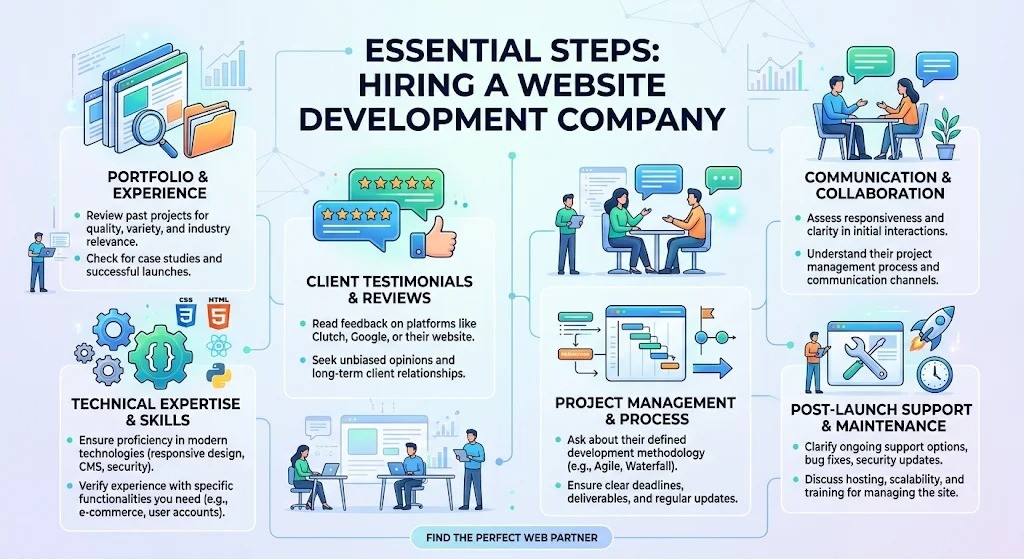
Your website is often the first impression customers have of your business. It works around the clock, builds trust, generates leads, and supports your brand. That is why choosing the right website development company is one of the most important decisions you will make. A poor choice can mean missed deadlines, blown budgets, security gaps, and a site that never delivers results. A good partner, on the other hand, becomes a long-term growth asset. Here is what to look for before you sign anything.
1. Define Your Goals Before You Start Searching
Before comparing companies, be clear about what you need. Agencies can only deliver what you can describe.
Clarify Your Website’s Purpose
Are you building an online store, a corporate site, a booking platform, or a simple portfolio? Each requires different skills, tools, and budgets. Write down your main objectives, such as generating leads, selling products, or improving brand credibility.
Set a Realistic Budget and Timeline
Know how much you can invest and when you need to launch. Sharing these upfront helps agencies propose realistic solutions instead of vague estimates, and it helps you quickly filter out companies that are not a fit.
2. Review Their Portfolio and Experience
A portfolio shows what a company can actually do, not just what it claims.
Look for Relevant Industry Experience
A company that has built sites for businesses like yours will understand your audience, compliance needs, and common challenges. While experience in your exact niche is not mandatory, it shortens the learning curve considerably.
Visit Their Live Projects
Do not rely only on screenshots. Open their past websites and test them. Check the loading speed, navigation, mobile layout, and overall polish. If their own work feels slow or confusing, yours probably will too.
3. Evaluate Technical Expertise
A beautiful design means little if the technology behind it is weak.
Check the Technology Stack
Ask which platforms and frameworks they use, such as WordPress, Shopify, Laravel, React, or custom solutions. A good company recommends technology based on your needs rather than pushing whatever they are most comfortable with. Ask them to explain why their choice suits your project.
Insist on Mobile-First, Responsive Development
Most web traffic now comes from smartphones. Your site must look and perform well on every screen size. Ask how they test across devices and browsers.
Prioritize Security and Performance
Security should never be an afterthought. Ask about SSL certificates, data protection, regular updates, backups, and protection against common attacks. Also ask how they optimize speed, since slow sites lose visitors and rank lower in search results.
4. Look for Strong Design and User Experience Skills
Good design is about how a site works, not just how it looks.
UI and UX Understanding
The company should think about user journeys: how visitors arrive, what they look for, and what pushes them to act. Ask whether they create wireframes or prototypes before development starts, and whether they base decisions on user behavior rather than personal taste.
Brand Alignment
Your website should reflect your brand’s voice, colors, and values. A company that asks detailed questions about your brand and customers is far more likely to deliver something that feels authentic.
5. Check Client Reviews and References
What past clients say often reveals more than any sales pitch.
Read Independent Reviews
Look at platforms such as Clutch, Google Reviews, and LinkedIn. Pay attention to patterns. One negative review can be an outlier, but repeated complaints about missed deadlines or poor communication are warning signs.
Speak to Past Clients
Ask for two or three references and actually contact them. Ask whether the project finished on time and on budget, how the team handled problems, and whether they would hire the company again.
6. Understand Their Development Process
A clear process is the sign of a professional team.
Communication and Project Management
Find out who your point of contact will be, how often you will receive updates, and which tools they use for collaboration. Regular check-ins and a dedicated project manager prevent misunderstandings and keep work moving.
Defined Milestones and Timelines
A reliable company breaks the project into stages, such as discovery, design, development, testing, and launch, each with deadlines and approval points. Be cautious of anyone who promises an extremely fast turnaround without explaining how.
7. Demand Transparent Pricing and Clear Contracts
The cheapest quote is rarely the best value.
Watch Out for Hidden Costs
Ask exactly what the price includes. Are hosting, domain registration, premium plugins, content creation, and revisions covered? Request a detailed, itemized proposal so there are no surprises later.
Confirm Ownership and Legal Terms
Your contract should state clearly that you own the source code, design files, and content once payment is complete. It should also outline payment schedules, revision limits, confidentiality terms, and what happens if either side cancels.
8. Ask About Post-Launch Support and Maintenance
A website is never truly finished. Software needs updates, security patches need applying, and bugs can appear after launch.
Ongoing Maintenance Plans
Find out whether the company offers maintenance packages, how quickly they respond to issues, and whether support is included for a period after launch. A company that disappears after delivery leaves you exposed.
Training and Documentation
Good agencies teach your team how to update content and manage the site. Documentation and short training sessions give you independence and reduce future costs.
9. Consider SEO and Scalability
Building a site is only half the job. People need to find it, and it needs room to grow.
Built-In SEO Foundations
Ask whether they follow search engine best practices, including clean code, proper headings, fast loading, structured data, and mobile optimization. Fixing these issues later is far more expensive than building them in from the start.
Future Growth
Your business will evolve, so your website should too. Ask how easily new features, pages, integrations, or higher traffic can be added without rebuilding everything.
10. Recognize the Red Flags
Some warning signs should make you pause or walk away:
- Unusually low prices with little explanation
- Pressure to sign immediately
- No portfolio, or work they cannot verify
- Vague answers about process, timelines, or technology
- Poor communication during the sales stage, which rarely improves later
- Refusal to give you ownership of your own website files
Final Thoughts
Hiring a website development company is an investment in your brand’s future, so treat it like one. Start with clear goals, examine portfolios and technical skills, verify reputation through reviews and references, and insist on transparent pricing and strong support. The best partner is not necessarily the biggest or cheapest. It is the team that understands your business, communicates openly, and builds a site that grows with you. Take your time, ask tough questions, and choose a company that treats your success as its own.