More London Patients Are Choosing Non-Surgical Body Contouring ?
Not everyone wants surgery to address stubborn fat, loose skin, or a lack of muscle tone and increasingly, they don’t have to. Non-surgical body contouring has moved well beyond gimmicky early devices into genuinely evidence-backed treatments, and London clinics are seeing rising demand from patients who want visible change without the recovery time or risk that comes with going under the knife.
What Is Non-Surgical Body Contouring?
Non-surgical body contouring covers a range of technologies designed to reduce fat, tone muscle, or tighten skin without incisions, anaesthesia, or the downtime associated with surgical procedures. Rather than one single treatment, it’s a category the right approach depends entirely on what you’re trying to change, whether that’s a stubborn fat pocket, loose skin, or underdeveloped muscle tone.
How Do the Main Technologies Work?
Fat Reduction: Cryolipolysis and Ultrasound
Cryolipolysis works by freezing targeted fat cells until they break down and are naturally eliminated by the body over the following weeks, typically achieving around 20–25% fat reduction in the treated area per session. Ultrasound-based treatments take a different approach, using sound waves to rupture fat cell membranes rather than freezing them, with a similar aim of gradual, natural elimination.
Muscle Toning: HIFEM Technology
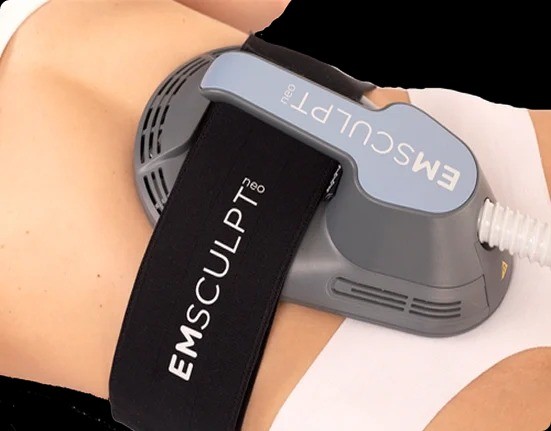
High-Intensity Focused Electromagnetic (HIFEM) technology triggers intense, involuntary muscle contractions far beyond what’s achievable through voluntary exercise. Combination devices pairing HIFEM with radiofrequency heating can simultaneously reduce fat and build muscle in the same session, with published clinical data showing average results of around 30% fat reduction and 25% muscle increase in treated areas.
Skin Tightening: Radiofrequency
Radiofrequency treatments use controlled heat to stimulate collagen production in the deeper skin layers, gradually firming loose or lax skin over the following months as new collagen forms. This is often paired with fat reduction treatments to address both concerns from the same course of sessions.
Who Is a Suitable Candidate?
Non-surgical body contouring generally suits people who are already close to their target weight but have specific, stubborn areas that haven’t responded to diet and exercise rather than those seeking significant overall weight loss. It’s not designed to remove large volumes of fat or correct significant excess skin, which remain firmly in surgical territory. A proper consultation, ideally with FDA approved body treatments London clinics that assess your specific anatomy, is the best way to establish whether you’re a realistic candidate before booking any course of treatment.
What Results Can You Expect?
Results build gradually rather than appearing immediately, since most technologies rely on the body’s own natural processes at cell elimination, collagen remodelling, or muscle adaptation — to deliver visible change. Most patients see meaningful results within six to twelve weeks, with continued improvement over following months. Multiple sessions are typically required for a complete result, and maintenance sessions are often recommended to preserve the outcome long-term.
Recovery and Safety
One of the main appeals of non surgical body contouring London patients choose is the minimal recovery time involved. Most treatments allow an immediate return to normal activity, with mild redness, swelling, or tenderness in the treated area resolving within hours to a few days. Serious complications are rare when treatments are performed by trained providers using properly cleared devices at appropriate settings, though it’s still worth discussing any risks specific to your chosen treatment during consultation.
How Does It Compare to Surgical Body Contouring?
Surgical procedures like liposuction or a tummy tuck remain the more effective option for significant fat removal, excess skin, or separated abdominal muscles non-surgical treatments simply can’t replicate that scale of change. What non-surgical options offer instead is a lower-risk, lower-downtime route to refinement for patients whose concerns are more moderate, making the choice less about which is “better” and more about which matches your specific starting point and goals.
Frequently Asked Questions
Does non-surgical body contouring really work?
Yes, when the right technology is matched to the right concern and the patient is realistically close to their target weight, clinical studies show measurable, verifiable results.
How many sessions will I need?
This varies by treatment and treatment area, but most non-surgical body sculpting protocols involve a course of several sessions rather than a single visit.
Is non-surgical body contouring painful?
Most treatments involve mild sensations like cold, heat, or muscle contraction rather than significant pain, and don’t require anaesthesia.
Can non-surgical treatments replace a tummy tuck or liposuction?
Not for significant excess skin, large fat volumes, or separated muscles these remain better addressed surgically, though non-surgical options for non-invasive body sculpting London clinics offer can be a genuinely effective route for more moderate concerns.
Final Thoughts
Non-surgical body contouring has earned its growing popularity through genuine clinical evidence, not just marketing, but it works best when the treatment is matched precisely to your specific concern and anatomy. Choosing an experienced, medically led clinic for a proper consultation is the most reliable way to understand whether a non-surgical route or a combination of treatments is realistically going to get you the result you want.