
What Makes Lucien Piccard Watch Unique for Collectors
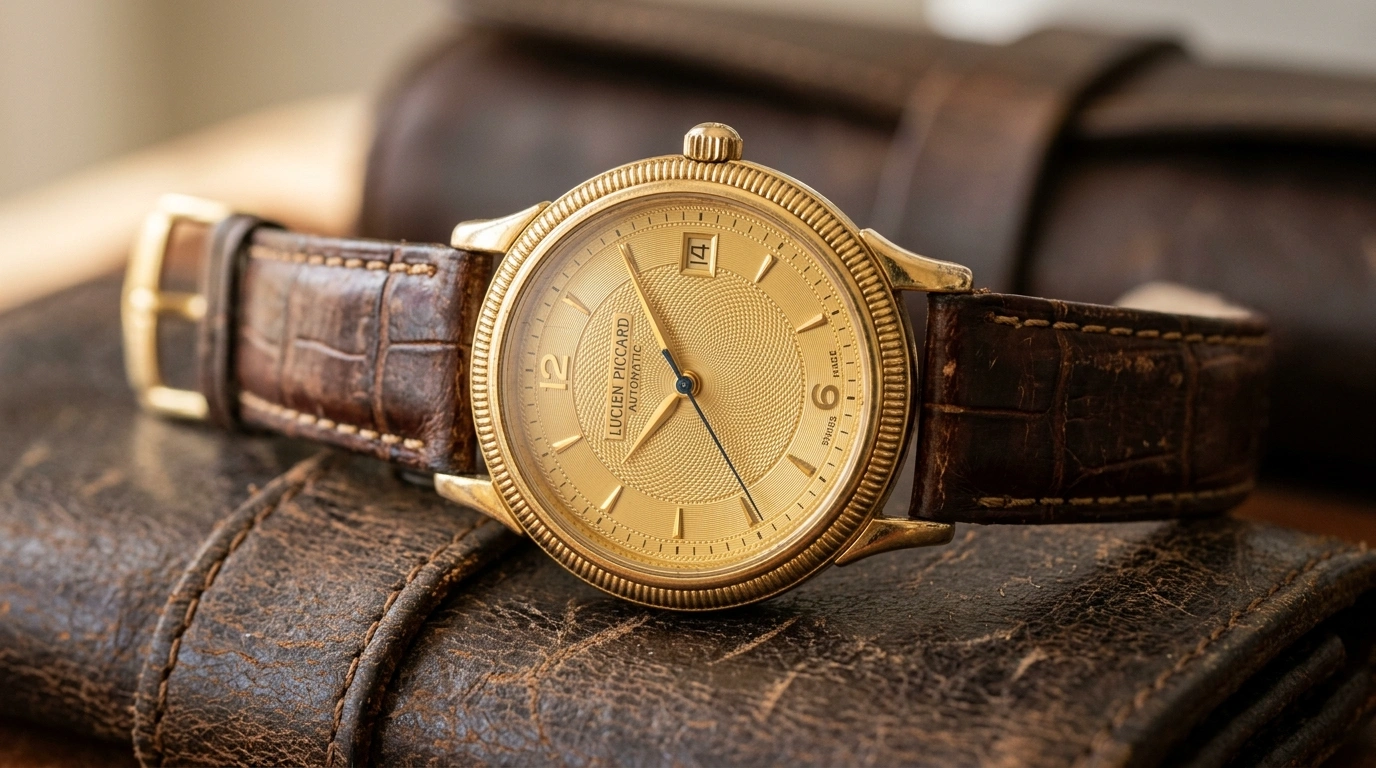
Some watch brands earn their reputation loudly. Others earn it slowly, quietly, through decades of craftsmanship and the kind of word-of-mouth that moves between collectors at estate sales and watch fairs — not press releases. A Lucien Piccard watch belongs to that second category. It was not built to dominate headlines. It was built to last, to be worn by people with taste, and to do things in design that its bigger-name competitors were not yet bold enough to try. For collectors who have grown bored of the usual suspects, that matters a great deal.
The Swiss Origins Behind Every Lucien Piccard Watch
Lucien Piccard was founded in 1923 in Lausanne, Switzerland — and that origin matters more than it might first appear. Switzerland in the early twentieth century was not simply a place where good watches were made; it was where watchmaking was practically a religion. The standards were different. The attention to finishing, to movement accuracy, to how a case sat on the wrist — these things were cultural, not just commercial.
What Lucien Piccard added to that tradition was a distinct appetite for design risk. The brand did not simply follow the conventions of its era. It challenged them, building timepieces for a cosmopolitan clientele that wanted something more considered than the mainstream offerings of the day. The first watch was apparently made by hand, and the watchmaker was satisfied enough with the result to put his own name on it. That instinct — building something you are proud enough to sign — is not a small thing.
A Pioneer in Gemstone Integration
Here is something most people do not know about Lucien Piccard: the brand was among the first to bring genuine gemstones into watchmaking. Diamonds, rubies, sapphires — not as afterthoughts or marketing add-ons, but as integral parts of the design, chosen with the eye of a jeweller rather than a parts supplier.
This was a real departure from what other watchmakers were doing at the time. Most were focused on movement refinement and case engineering. Lucien Piccard looked at a watch and asked a different question: what if it also looked like something you would find in a jewellery box? The answer changed what a luxury watch could be. For collectors today, it means these pieces carry a dual value — horological and aesthetic — that most watches from the same period simply do not have. Finding an intact example still set with original stones is the kind of discovery that makes a collector’s year.
Celebrity Provenance: Frank Sinatra, Elvis, and the Stories Watches Carry
It would be a mistake to dismiss celebrity associations as mere marketing. When the person wearing the watch is Frank Sinatra, and the watch was given to him by Ava Gardner with the engraving “To Frank and desert nights”, you are not dealing with a sponsorship deal. You are dealing with history.
Lucien Piccard was genuinely the watch of choice for a remarkable group: Sinatra, Elvis Presley, and Joe DiMaggio. The Ava Gardner Museum still displays the Sinatra piece — a 1960 model with a 17-jewel Swiss manual wind movement in a 14K solid yellow gold case. That watch exists. It is not a rumor or a marketing story. It is in a museum.
For collectors, this kind of provenance does something that no amount of spec-sheet reading can replicate. It places the brand inside a specific cultural moment — Old Hollywood, mid-century American glamour, the last era before everything was photographed and posted. Owning a Lucien Piccard from that period is a small, quiet connection to all of it.
Exceptional Design Diversity Across Decades
One thing that consistently surprises people new to Lucien Piccard is how varied the catalogue actually is. This was not a brand that found one successful formula and repeated it for fifty years. The designs shifted, experimented, and occasionally went somewhere genuinely surprising.
The 1970s world timer is a good example — 14K gold case, integrated bracelet, a dial mapped with time zones and a sword handset. It is a complicated, ambitious piece that looks nothing like a standard dress watch. Then there are the skeleton models from the 1960s, where the movement itself becomes the dial. An 18K yellow gold skeleton from that era sits in a category that most collectors associate with much more expensive brands. Finding one at a reasonable price still happens, though not as often as it used to.
And then there is the 1968 “Tutti Frutti”—a watch built entirely against the grain of its moment. While the rest of the industry chased the clean, industrial aesthetic of the Space Age, Lucien Piccard made something deliberately excessive, colourful, and ornate. At the time, the brand was considered on par with the biggest names in the Swiss industry. History has been somewhat unkind to that reputation, which is exactly why these pieces are interesting right now.
The Slim-Line Design Philosophy That Still Holds Up
Across all of this variety, one thread runs consistently through Lucien Piccard’s output: restraint in the case. The brand built a reputation early on for slim-line watches — lightweight, unobtrusive, elegantly proportioned pieces that sat on the wrist without demanding attention.
This is harder to achieve than it sounds. Thinning a case without compromising the movement requires real engineering discipline. Lucien Piccard managed it across decades, and the result is a collection of dress watches that work just as naturally under a modern shirt cuff as they did in the 1950s. That kind of wearability has real value for a collector who actually intends to wear what they buy.
Collector Value: Strong History, Accessible Prices
The honest reason many serious collectors are paying attention to Lucien Piccard right now is that the prices have not caught up to history. Comparable pieces from brands with bigger marketing budgets cost three to five times more for what is, in several cases, a lesser watch. Skeletonised movements, gemstone-set cases, complete world timers with original bracelets and documentation — these still surface at prices that feel like they belong to a different decade.
That gap will close. It already is, slowly. But for now, a collector willing to do the research can still find genuinely exceptional pieces at genuinely fair prices.
For anyone building a collection with actual depth, a Lucien Piccard watch represents something harder to find than it should be: a brand with a real history, a distinctive design voice, celebrity provenance that is documented and verifiable, and pieces that hold up both on the wrist and under scrutiny. That is not a common combination. When you find it, you buy it.